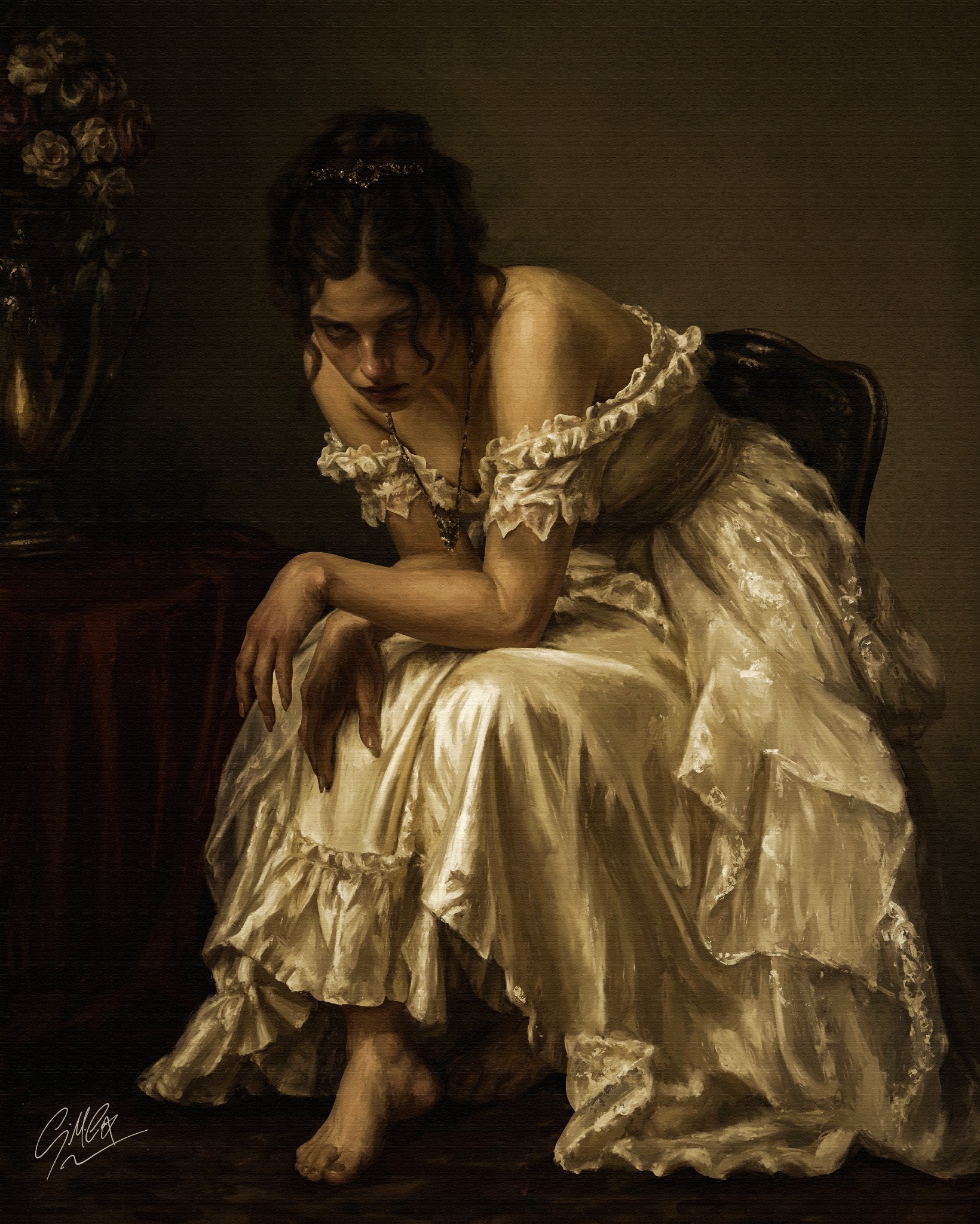
Mammal in a Sunday Dress (2026)
Mammal in a Sunday Dress explores the uneasy relationship between femininity, civilisation, and the animal body. At first glance, the figure appears modest and withdrawn. Her posture is composed, her gaze seemingly lowered towards her bare feet, recalling the conventions of nineteenth-century portraiture where women were often depicted as passive objects of observation. Yet as the viewer moves closer, the illusion collapses. Her eyes are not lowered at all. She is looking directly back.
The delayed eye contact transforms the encounter. The viewer approaches believing they are safely observing a woman; instead, they realise they have been observed themselves. The work refuses the traditional power dynamic of portraiture, denying the comfort of anonymous spectatorship. Looking becomes a reciprocal act.
For Cox, the painting considers humanity's persistent desire to separate itself from the rest of the animal kingdom. The title quietly undermines this distinction. A "mammal" is not another creature—it is us. The Sunday dress, rich with cultural associations of femininity, morality, and respectability, becomes an attempt to distinguish ourselves from nature. Yet clothing cannot alter biology. Beneath lace and ritual remains the same vulnerable animal body.
The work also reflects on the historical relationship between women and nature. Across art, religion, and philosophy, women have repeatedly been positioned as closer to instinct, emotion, reproduction, and the body itself, while men have been aligned with reason, culture, and civilisation. Mammal in a Sunday Dress does not reject this comparison. Instead, it questions why proximity to nature has so often been treated as something lesser.
Chiaroscuro isolates the figure within darkness, allowing the luminous dress to symbolise the performance of civilisation while the bare feet quietly return the body to the earth. Neither is presented as more truthful than the other. The painting exists in the tension between performance and instinct, refinement and biology.
Mammal in a Sunday Dress ultimately asks a simple but unsettling question: if every layer of culture were stripped away, what would remain? Not a king. Not a saint. Not a gentleman or a lady. Only another mammal, looking back.
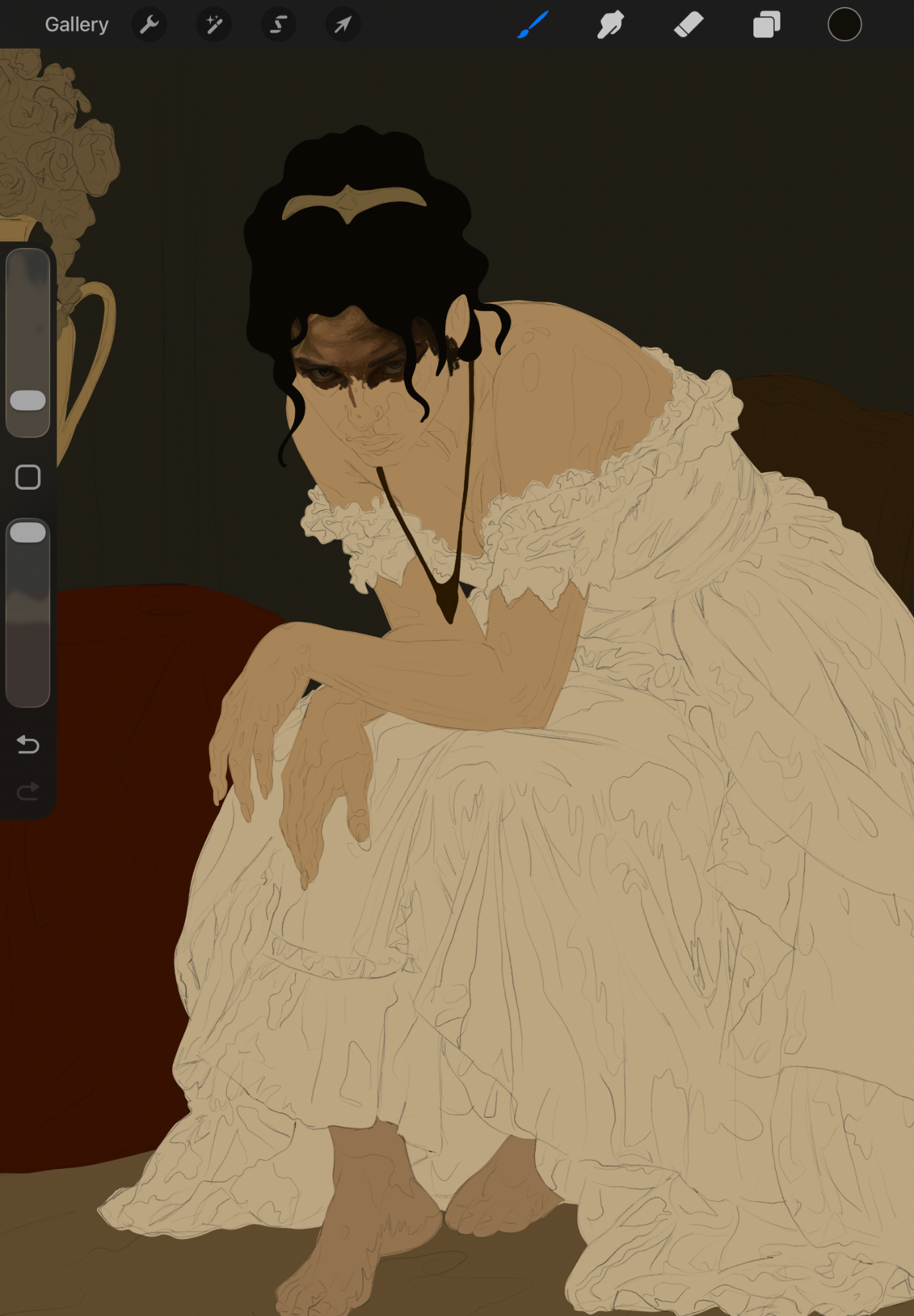
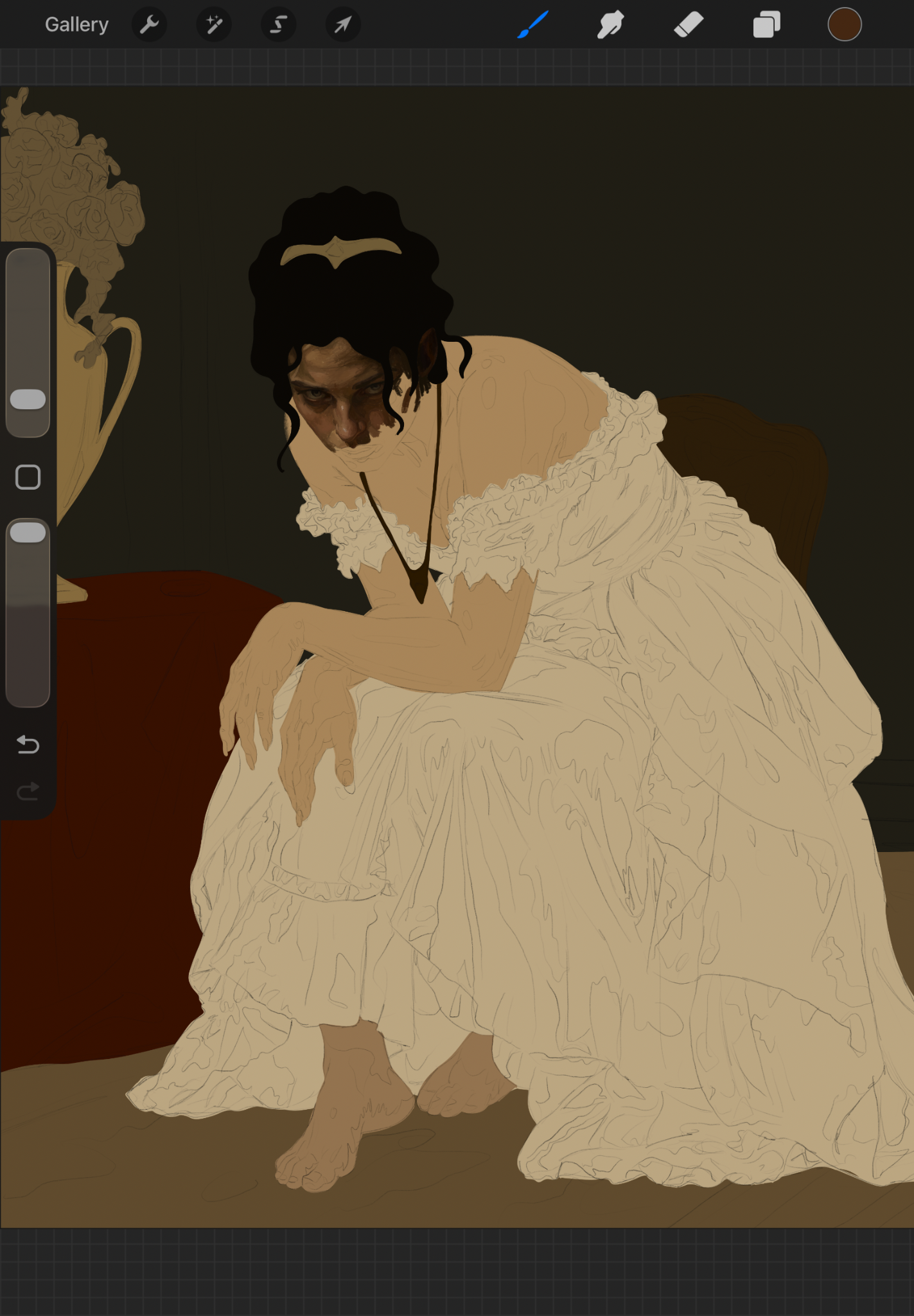
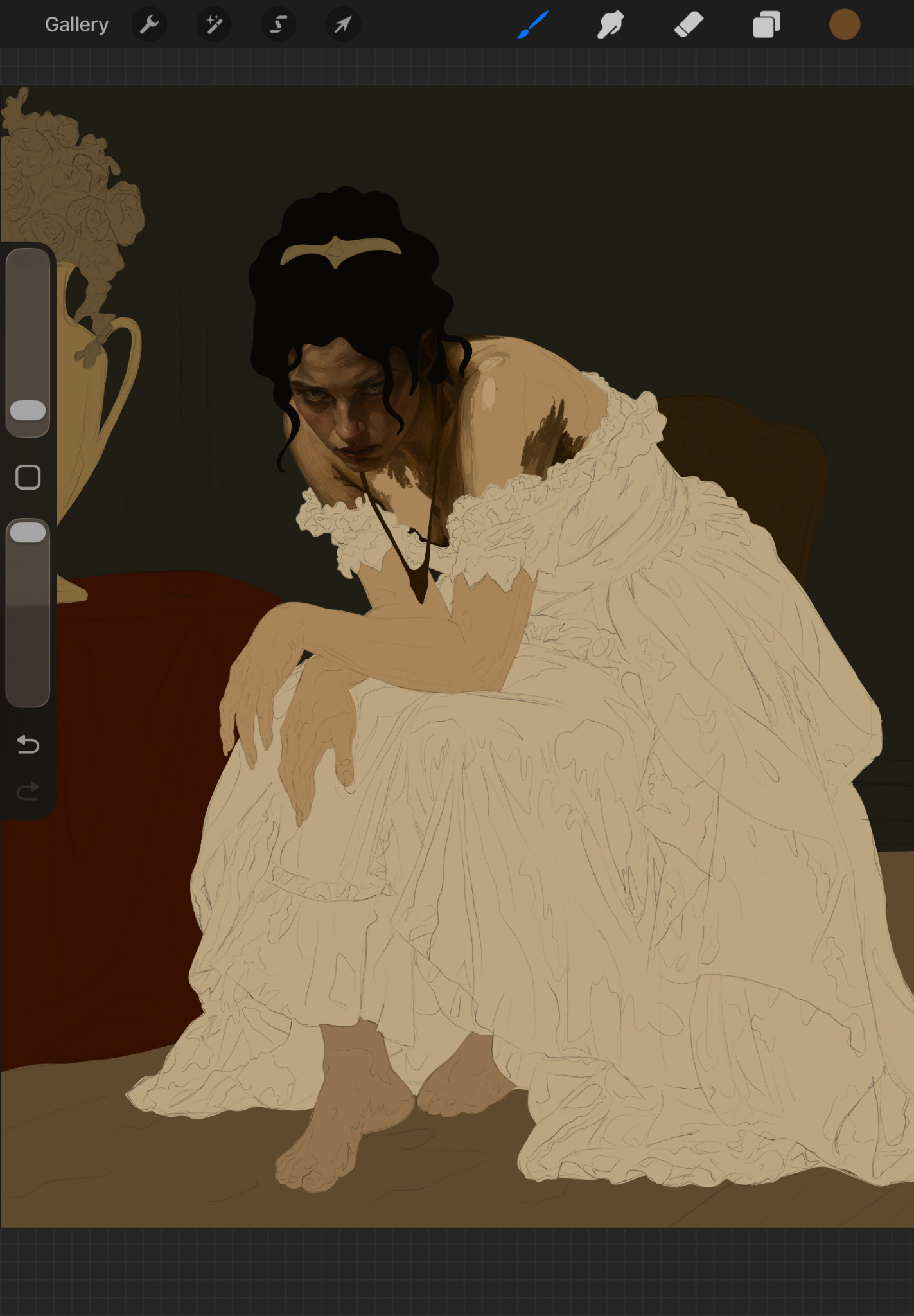
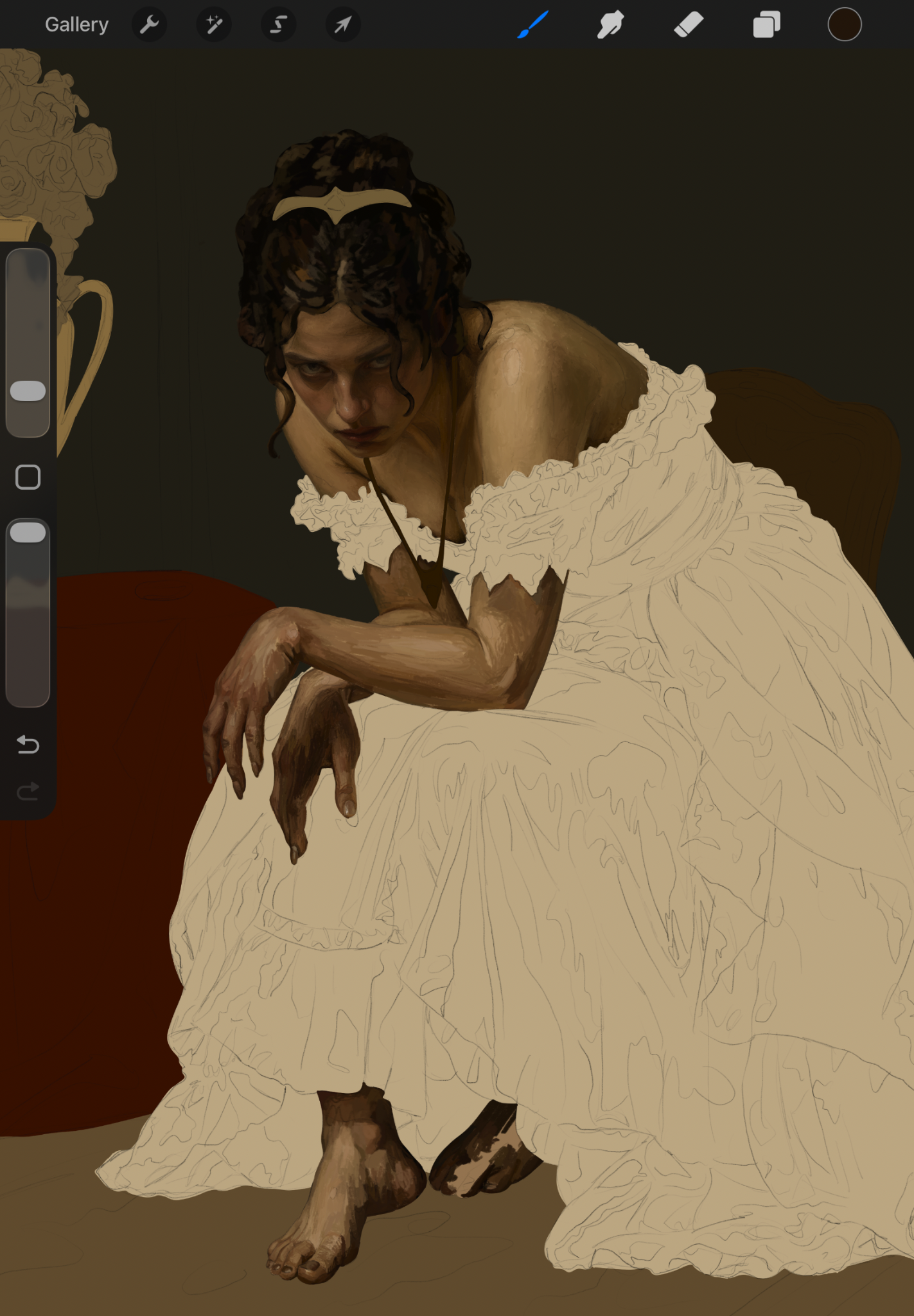
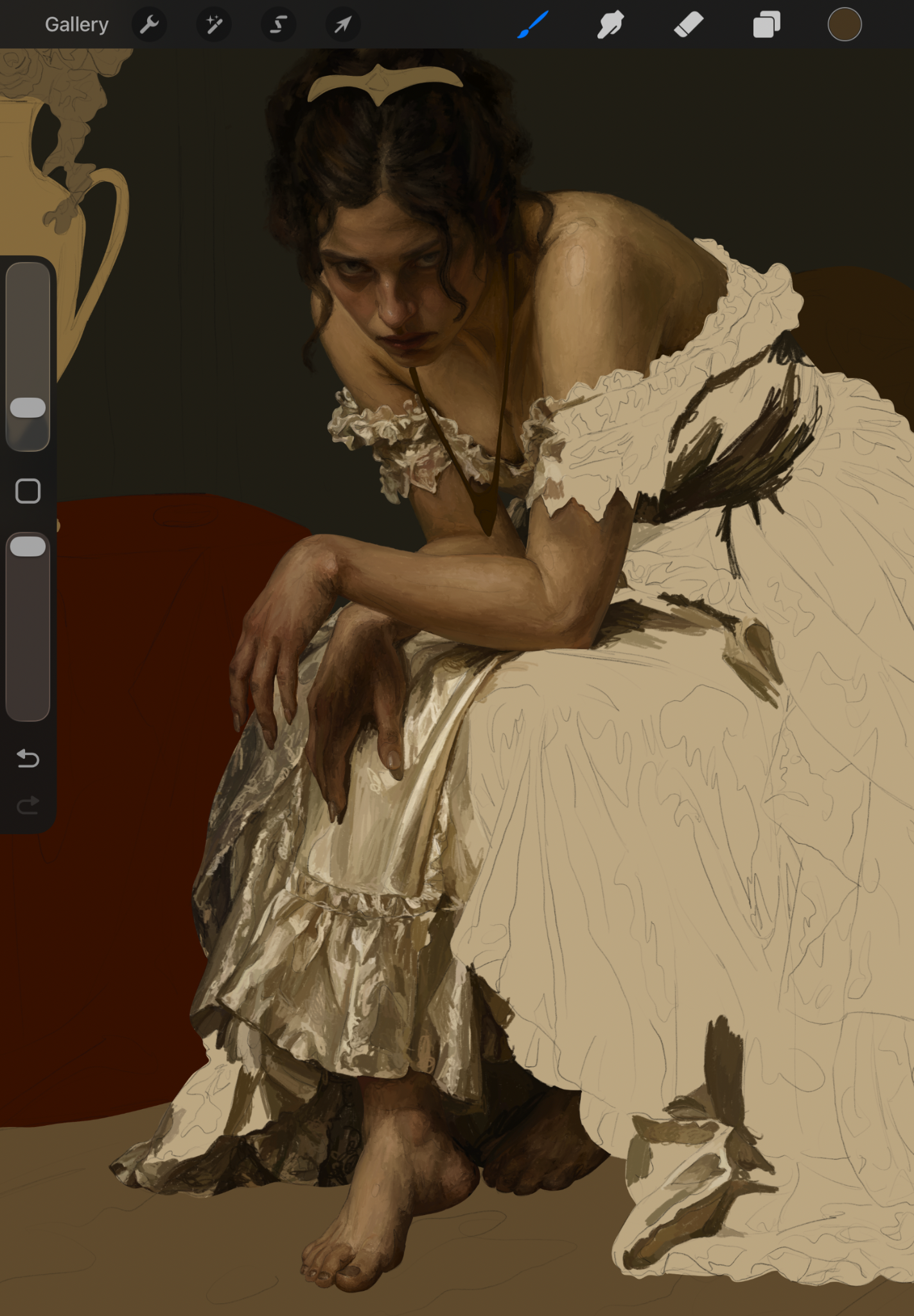
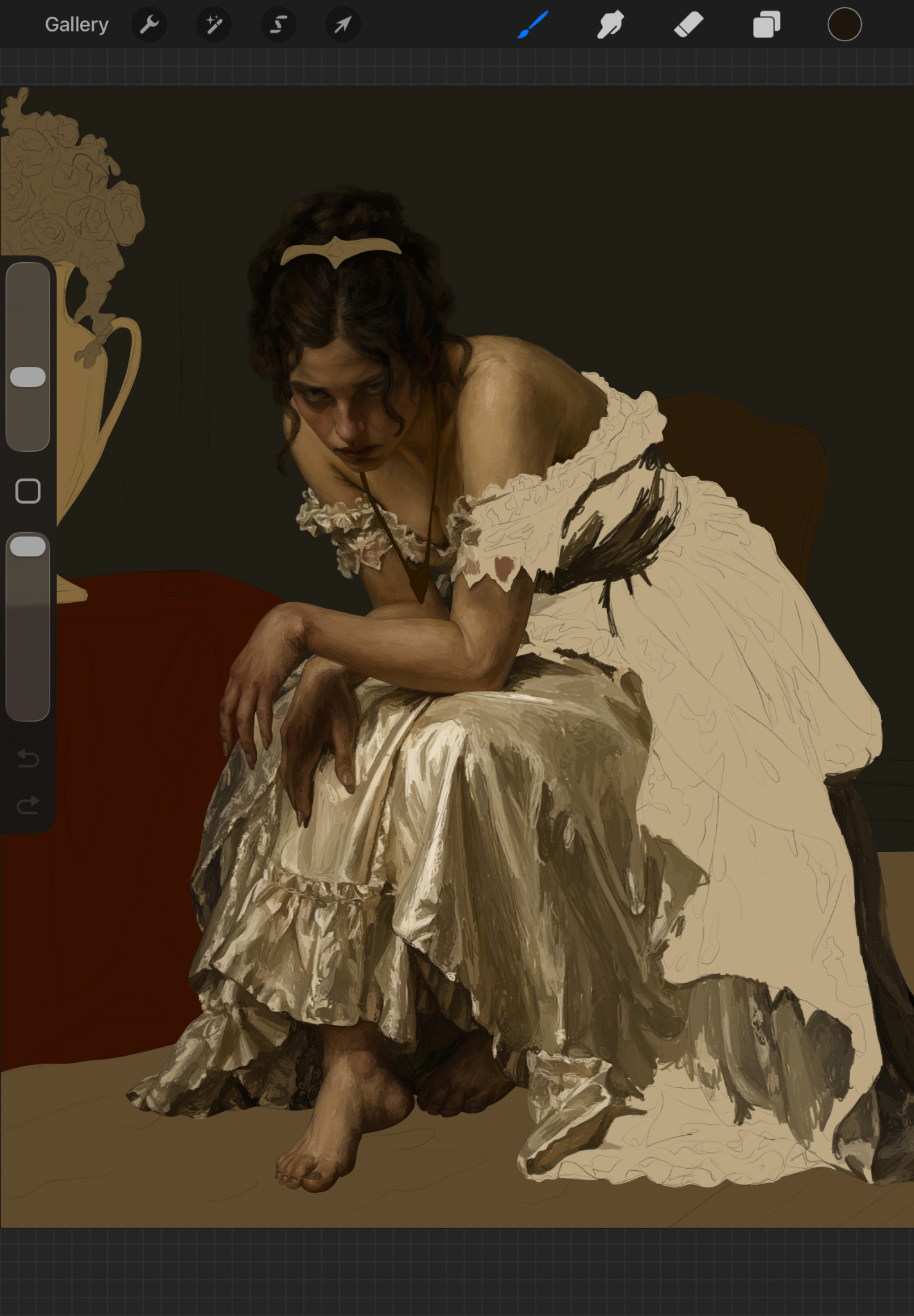
WIP Shots
3 Comments Add a Comment?
Onrey
The composition and flow!! Very cool concept, it translates phenomenally, this just became my new favorite painting!
Jax
I saw this because someone shared this to tumblr. I love it!
cw
what an evocative piece! i love this! any chance you will release a postcard version?