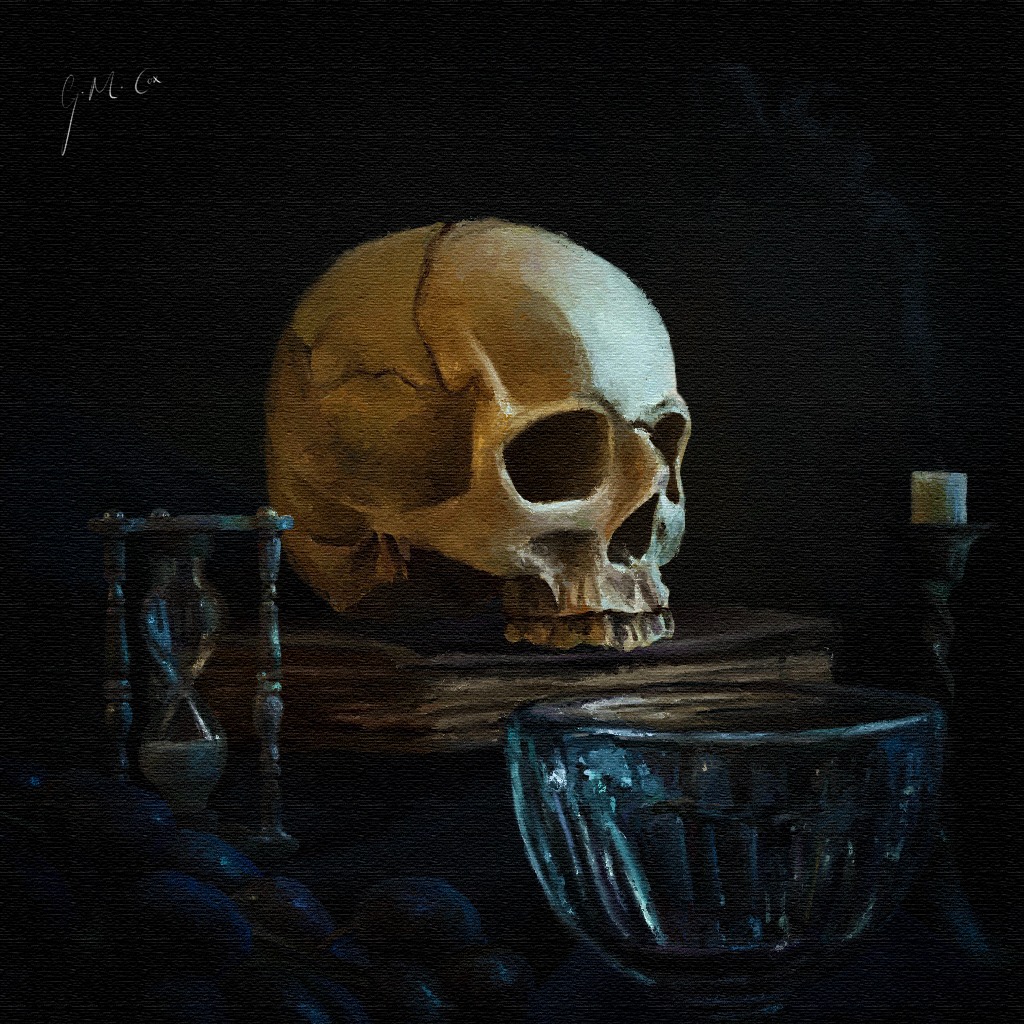
VADITAS (2023)
Vaditas draws from the tradition of seventeenth-century vanitas painting, revisiting its symbolic language through a modern lens. The composition follows the structure of a devotional still life — a skull, an extinguished candle, a glass vessel, an hourglass — each object chosen for its quiet insistence on impermanence. Yet rather than moral instruction, the painting offers contemplation: a study in the delicate balance between decay and beauty.
The subdued lighting and limited palette heighten the work’s sense of stillness. Within this darkness, every surface becomes luminous — bone, glass, and wax catching fragments of reflected light. The result is a painting less concerned with narrative than with atmosphere, where silence itself becomes the subject.
While rooted in historical reference, Vaditas speaks to contemporary stillness: the pause between exhaustion and acceptance, the reverence found in slowing down. The skull here is not only a reminder of mortality but a marker of reflection, a vessel for thought rather than fear.
Painted digitally using layered chiaroscuro techniques, Vaditas emulates the texture and tonality of classical oil painting. The palette was restricted to earth tones, umber, and muted blues, with subtle glazes to evoke the weight of aged varnish. Each object was rendered with attention to surface — from the porous matte of bone to the refractive density of glass — to create a dialogue between opacity and transparency. Compositionally, the painting adheres to the triangular balance of traditional vanitas works, anchoring darkness with a single light source to invite meditative focus.
0 Comments Add a Comment?