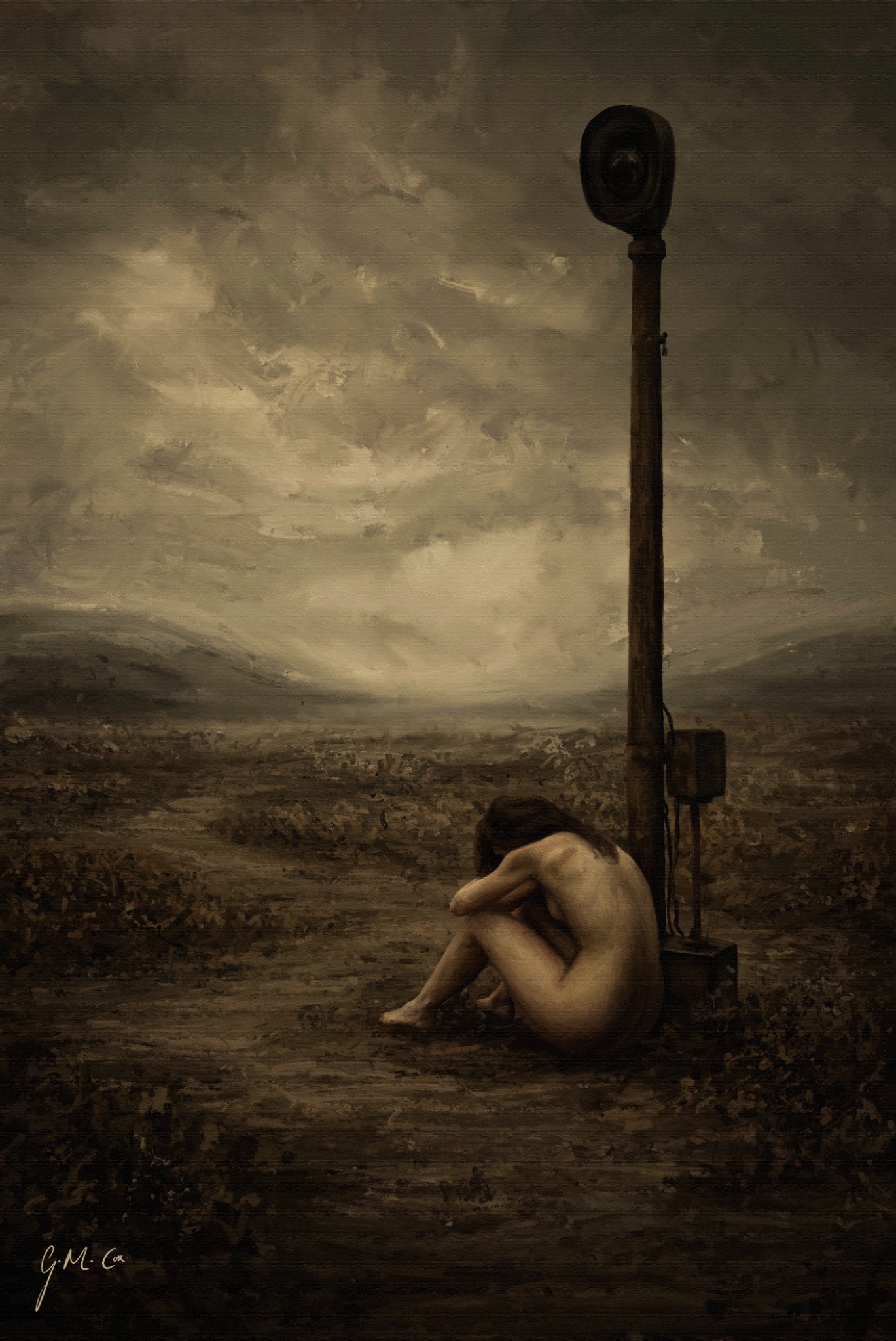
Checkpoint (2026)
Checkpoint depicts a moment of forced stillness rather than collapse. The figure is seated low to the ground, body folded inward, positioned beside a vertical structure that suggests surveillance, measurement, or passage. The setting is open and exposed, yet empty — a landscape without witnesses, destinations, or narrative direction. This is not a scene of arrival or departure, but of suspension.
The work resists spectacle. There is no visible threat, no overt violence, no action taking place. The posture is closed but controlled, signalling endurance rather than distress. The figure does not reach outward or upward; instead, she remains contained within herself, as if waiting for a permission that has not been given, or has already been denied.
The palette is subdued and earthen, dominated by greys, browns, and muted ochres that flatten time and space. The sky presses low and heavy, echoing the weight of the pause. Light does not function here as revelation, but as exposure, illuminating the body without offering clarity or resolution. The environment appears survivable, even mundane, which makes the stillness easier to overlook.
The vertical structure beside the figure reads ambiguously: part marker, part signal, part instrument. It implies a system, specifically one that measures, observes, or authorises movement, yet it remains inactive. Nothing is happening, but something has already occurred. The figure’s presence beside it suggests such compliance without relief.
In Checkpoint, the act of waiting becomes the subject. This is not a moment before a crisis, nor the aftermath of one clearly defined event. It is the kind of pause that persists because it does not register as urgent. The figure is intact. Conscious. Still standing, even when seated. And so, nothing intervenes.
The work does not need to be resolved. It does not escalate. Instead, it insists on remaining here, in the quiet space where discomfort is tolerated because it does not yet qualify as "wrong enough."
Post a comment