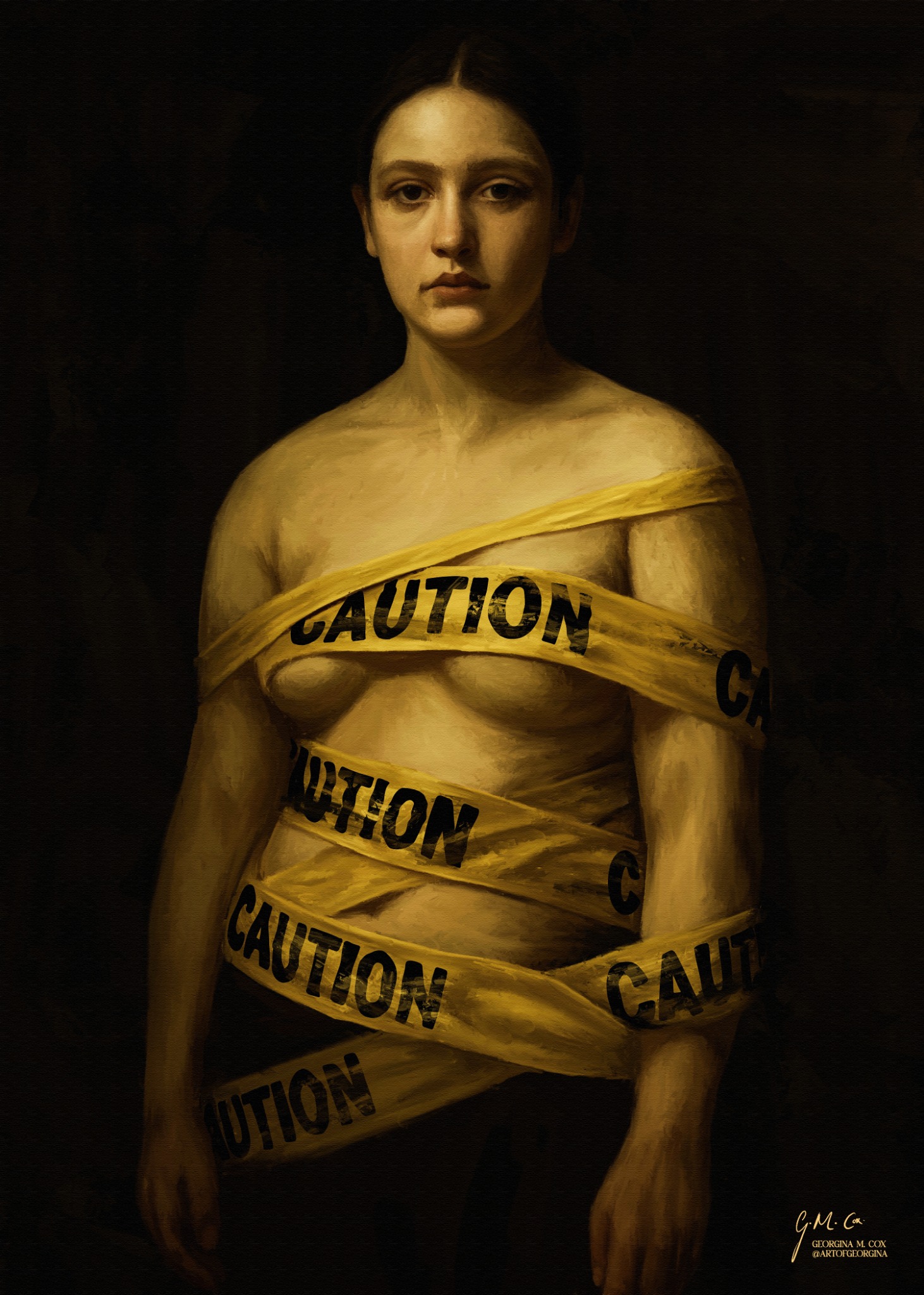
Caution Is Not Care (2025)
Caution Is Not Care reflects the internalisation of being treated as a danger rather than a person. Wrapped in warning tape, often a visual language borrowed from crime scenes and hazardous zones, the figure becomes something to be avoided, managed, or contained. The tape does not protect her; it marks her body as a risk.
For Cox, the work stems from an experience of trauma that reshaped how she understood her own physical presence. Afterward, her body no longer felt neutral or safe, rather it felt charged, watched, and burdensome. People approached her carefully, hesitantly, as if proximity itself required warning. The language of “caution” replaced care, and concern became distance.
The partial nudity of the figure is deliberate but not invitational. It is not meant to depict the artist herself, but rather the way she felt, including exposed, assessed, and stripped of privacy without consent. The work gestures toward the anxiety of being seen naked for the first time by a partner after trauma: not fear of desire, but fear of being handled wrongly, misunderstood, or treated as fragile debris rather than a human body capable of safety.
Chiaroscuro isolates the figure against darkness, heightening the sense of singular scrutiny. The body is lit as evidence rather than intimacy; the tape interrupts flesh, flattening it into surface. What appears to be restraint is actually a declaration of how external perceptions can bind more tightly than touch.
Caution Is Not Care challenges the assumption that gentleness is always kindness. Sometimes caution is a refusal to engage. Sometimes it is avoidance disguised as respect. The work asks where care ends and othering begins, and what it does to a person when they learn to see themselves as a hazard.
Post a comment